10 UX Design Ideas For AI in Education
Explore a list of practical ways user experience design can reshape AI for education and society. From explainable outputs to adaptive learning paths, each idea shows how technology can be built to empower learners. But at the center of it all are educators, their guidance, lesson delivery, and support remain pivotal. Teachers redefine and sustain systems, build new ones, and promote inclusive, sustainable education. AI may provide the framework, but it is educators who inspire curiosity, celebrate wins, and enrich the learner’s journey. Together, they create learner-centered systems that last.
AI NEWSAI SOFTWARE DEVELOPMENTAI TRENDS
Prajim Mannemplavan
2/5/20262 min read
10 UX Design Ideas For AI in Education
Since we brought up UX design, let's dive into 10 current uses that will change how we think about AI.
Explainable Outputs in Plain Language
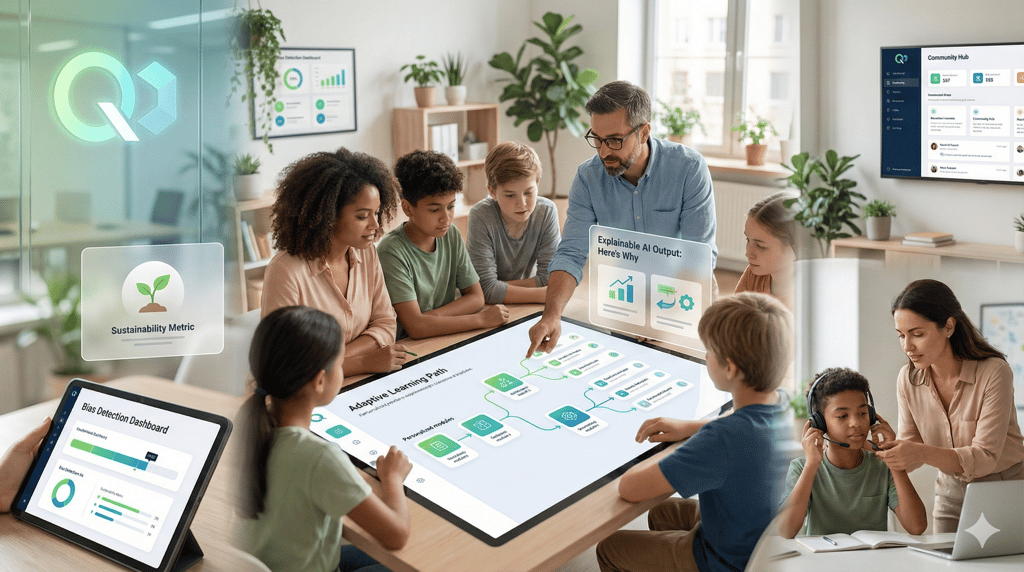
Imagine a student using AI to solve math problems. Instead of just giving the answer, the system explains the steps in simple words. This builds confidence. It shows the learner how the answer came, not just what it is.
Bias Detection Dashboards for Users
Picture a teacher reviewing AI-generated essays. A dashboard highlights potential bias in language or examples. The teacher can adjust, ensuring fairness. It’s transparency in action.
Inclusive Policies for Rural and Urban Learners
In a village classroom, connectivity is weak. In a city, students have fast internet. AI tools must adapt to both. Offline modes, lightweight apps, and local language support make inclusion real.
Voice-First Interfaces for Accessibility
Think of a visually impaired learner. Instead of typing, they speak. The AI listens, responds, and guides. Voice-first design opens doors for those who otherwise struggle with screens.
Transparent Consent Flows for Data Use
Parents in a school want to know how student data is used. A clear consent screen explains what’s collected, why, and how it benefits learning. Less jargon. Just clarity.
Real-Time Feedback Loops Within Institutions
During a training program, faculty share live feedback through an app. The AI adjusts the curriculum instantly. Stakeholders feel heard. Programs evolve in real time.
Adaptive Learning Paths for Students
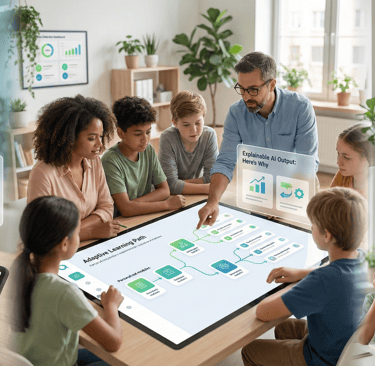
A student in Nairobi struggles with algebra but excels in geometry. The AI adapts, offering more algebra practice while celebrating geometry wins. Personalized paths keep motivation high.
Cultural Sensitivity in Design Frameworks
In Kerala, examples in lessons reference local festivals. In Zambia, they reference community traditions. AI design respects culture. It makes learning relatable.
Human-in-the-Loop Decision Checkpoints
An AI suggests curriculum changes. But before implementation, educators review and approve. Human agency stays central. AI supports, but people decide.
Sustainability Metrics Built into AI Dashboards
A school in Male tracks how AI reduces paper use. Another in Bengaluru measures energy savings. Dashboards show sustainability impact. AI becomes part of the green journey.
Mentors are the Heart of Learning Engines
These learning methods are not futuristic. They are practical and readily accessible. They come from listening, testing, and adapting. When UX design meets AI, the result is systems that place the learner at the center. With technologies like AR, VR, telecom connectivity, IoT, and AI, education moves beyond static delivery into immersive, practice-oriented learning. These tools create environments where knowledge is experienced, not just consumed.
Yet, at the heart of this journey, the educator remains essential. Lesson delivery, guidance, and support are the anchors. A child needs someone to bounce ideas back, gain advice, celebrate wins, and be inspired. Teachers provide that human connection and wisdom honed through enthusiasm. They ensure that technology does not replace agency, but amplifies it. Their role is to shape curiosity, and inspire confidence as achievement.
Ultimately, micro-interactions by a user become powerful self-learning techniques. They can be implemented to design systems across curricula, rooted in values that enrich the learner’s experience. AI and emerging technologies provide the framework, but the educator is who breathes life into next-generation learning systems. Together, we help create learning journeys that are sustainable, inclusive, and deeply human.