Culture, Heritage, and Arts in the Age of AI
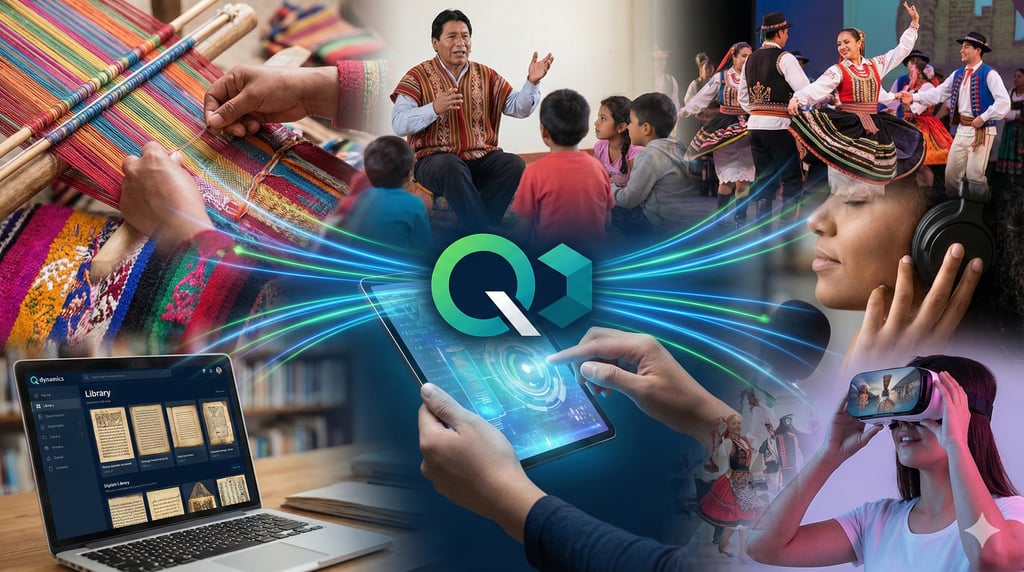
In today’s learning landscape, culture is not separate from education. It is education. Handicrafts, weaving, speech, listening, dancing, and folk arts are forms of knowledge that shape identity. AI can preserve and teach them. Digital libraries, mobile platforms, and immersive technologies make this possible.
AI TRENDSAI NEWSINDUSTRY INSIGHTS
Prajim Mannemplavan
2/4/20264 min read
Building a Culture of Learning
Learning is not textbooks and an individual quest for knowledge. Learning is about human pursuits that bind us together. When a child in Kerala learns about sustainable diets from elders, that knowledge is as valuable as algebra. When oral storytelling in Nairobi is archived with AI, it becomes part of a global library. These examples show inclusion. They sustain culture while promoting education.
Here’s a guiding thought: What happens when cultural knowledge is treated as equal to academic knowledge? Communities thrive. Learners see themselves reflected in their education.
Technology is a Bridge
AI works with AR, VR, IoT, and telecom connectivity to create immersive, practice-oriented learning. These tools turn passive watching into active participation. Heritage becomes interactive, and knowledge flows across boundaries.
The democratization of the internet and smartphones in India opened doors to new possibilities. Affordable data plans and widespread mobile access transformed villages into connected hubs. Farmers began checking crop prices online. Students in remote areas joined digital classrooms. Small businesses found new markets through e-commerce. Innovation streams multiplied, from fintech startups to edtech platforms.
This shift shows how access changes everything. When connectivity reaches tribal communities in Kerala, their crafts can be documented and shared globally. When rural learners join digital libraries, they gain equal footing with urban peers. The question is: how do we keep building systems that ensure every learner, artisan, and entrepreneur has the chance to thrive in this connected world?
What’s at the Heart of Personal Growth?
Educators and mentors have always shaped the world. From coaches guiding athletes to victory, to professors inspiring breakthroughs in technology, to directors nurturing talent in entertainment, their influence is everywhere. Think of Phil Jackson mentoring Michael Jordan, Steve Jobs crediting teachers for sparking his curiosity, or Oprah Winfrey acknowledging mentors who helped her find her voice. Leadership itself is often born from guidance.
Peers also play a vital role in self-development. Human agency in learning means the ability to question, reflect, and grow with others. A child bouncing ideas with classmates, a coder learning from open-source communities, or an artist refining skills through collaboration, all are examples of agency at work. It is the shared journey that strengthens individual growth.
This role becomes even more critical today. Rapid innovation, tech adoption, social media, and data aggregation reshape the social fabric. Risks abound, as misinformation, isolation, and inequity makes way into life. Teachers and mentors mitigate these risks by grounding learners in values, context, and responsibility. They help navigate change, ensuring that technology amplifies human potential rather than eroding it. Sharing the journey, evoking curiosity and enthusiastically shaping conversations around growth are central to learning. In this way, educators remain central to sustaining systems, building new ones, and promoting inclusive, sustainable education.
Real-World Examples
In Mysore, students access archives of folk music. They remix traditions with modern beats, creating new art forms. See more at the Folklore Museum of Mysore.
In Nairobi, oral storytelling traditions are digitized. Youth learn stories that once risked being forgotten. Download Kenyan legends in digital format.
In Kerala, tribal crafts are documented and shared globally. Communities gain recognition and pride.
These transformations show how culture and heritage become part of the learning journey.
Impact of Community and Agency in Learning
Curricula like IB and CIE emphasize creativity and cultural awareness, but their true value lies in how they prepare youth for an AI-first, content-heavy, digital-first environment. Sugata Mitra’s “Hole in the Wall” experiment showed how children, when given access, could teach themselves complex ideas. Maria Montessori built frameworks where values and independence guided learning. These approaches resonate today, where folk traditions, vocational training, sports, and technical skills are not just pathways to employment but lifestyle benefits that enrich communities.
Think of how mentors shaped athletes like Sachin Tendulkar, whose coach Ramakant Achrekar instilled discipline and vision. Or how scientists like A.P.J. Abdul Kalam, guided by teachers, redefined how India accessed technology and inspired generations to dream beyond boundaries. In entertainment, figures like Beyoncé credit mentors for nurturing creativity that transcends performance into cultural leadership. These stories remind us that human agency in learning, our ability to reflect, collaborate, and grow with communities, is central to personal growth.
Where Do We Stand?
Consider this:
A student in Bengaluru uses a mobile library to learn traditional dance. She shares her performance with peers in Nairobi. Together, they celebrate culture across continents. Learn more from UNESCO’s publication on Human Learning in the Digital Era (2019).
A group of learners in Calicut access archives of weaving techniques. They combine tradition with modern design, creating new opportunities. Learn more here.
Here’s what to ask:
How do we design systems that make culture central to education?
How do we ensure every learner feels part of this journey?
How do we balance technology with human agency?
Take a Stand for the Future
Culture, heritage, and arts are not separate from education. They are its foundation. AI and digital libraries provide the framework. Teachers, communities, and shared responsibility breathe life into next-generation learning systems. Together, we create learning journeys that are sustainable, inclusive, and deeply human.