Answer Engine Optimization (AEO): How to Make Your Business the Answer AI Gives
AEO means structuring your website content so AI-powered search tools can understand, retrieve and reference it. Five practical steps, and where to start.
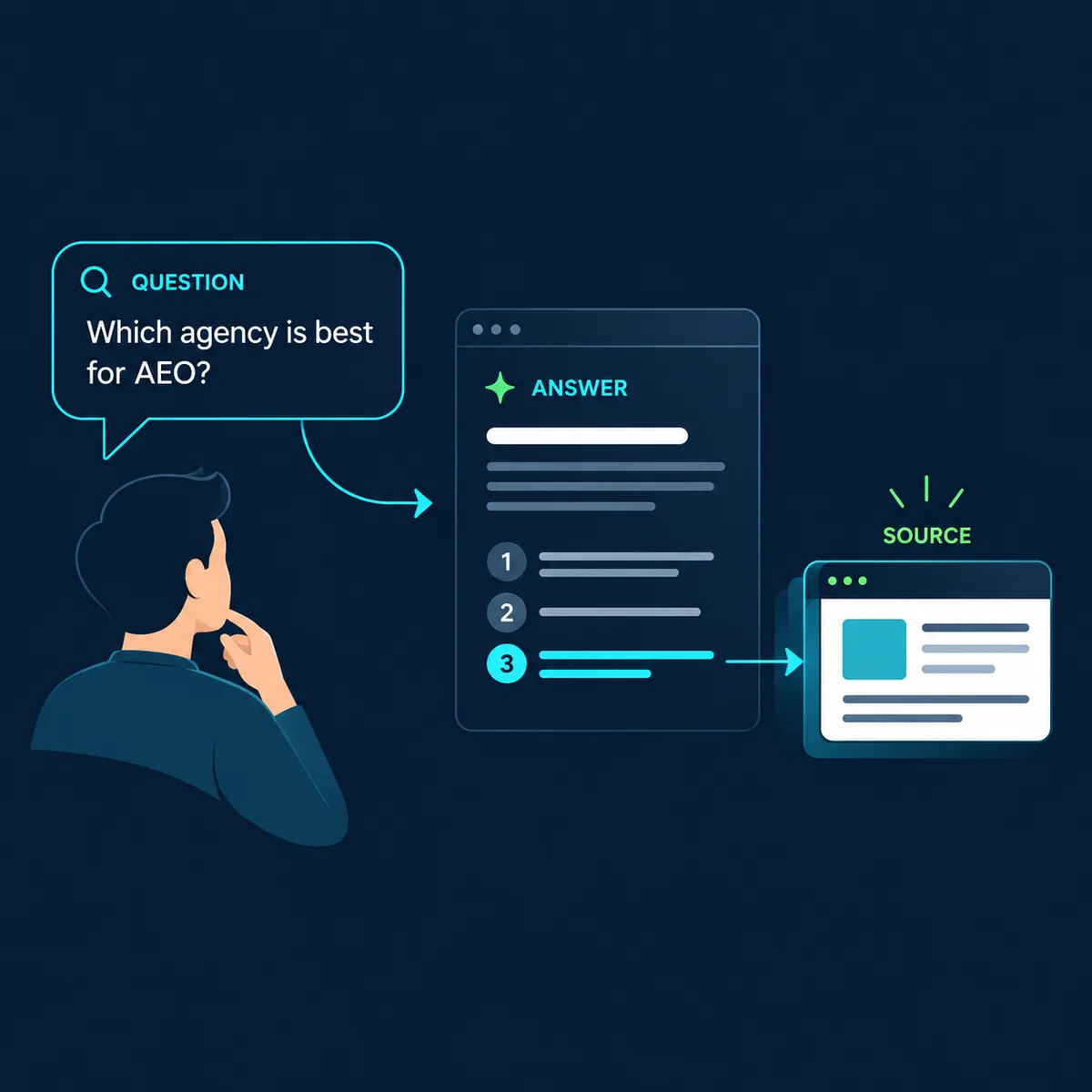
Someone asks ChatGPT to recommend a web development company. Another asks Google’s AI Overview how to improve website speed. A third wants to know which digital marketing agency understands their industry.
The answers may name a handful of businesses. Is yours one of them?
This is where Answer Engine Optimization (AEO) comes in.
What is AEO?
Answer Engine Optimization is the practice of structuring your website content so AI-powered search tools can understand, retrieve and potentially reference it when answering questions.
Traditional SEO helps people discover your website through search results. AEO focuses on making your content useful and clear enough to serve as an answer.
The two work together. Neither guarantees that an AI tool will recommend or cite your business, but both help build your online visibility.
1. Answer the question before explaining it
People searching online usually want an answer, not an introduction that takes three paragraphs to get there.
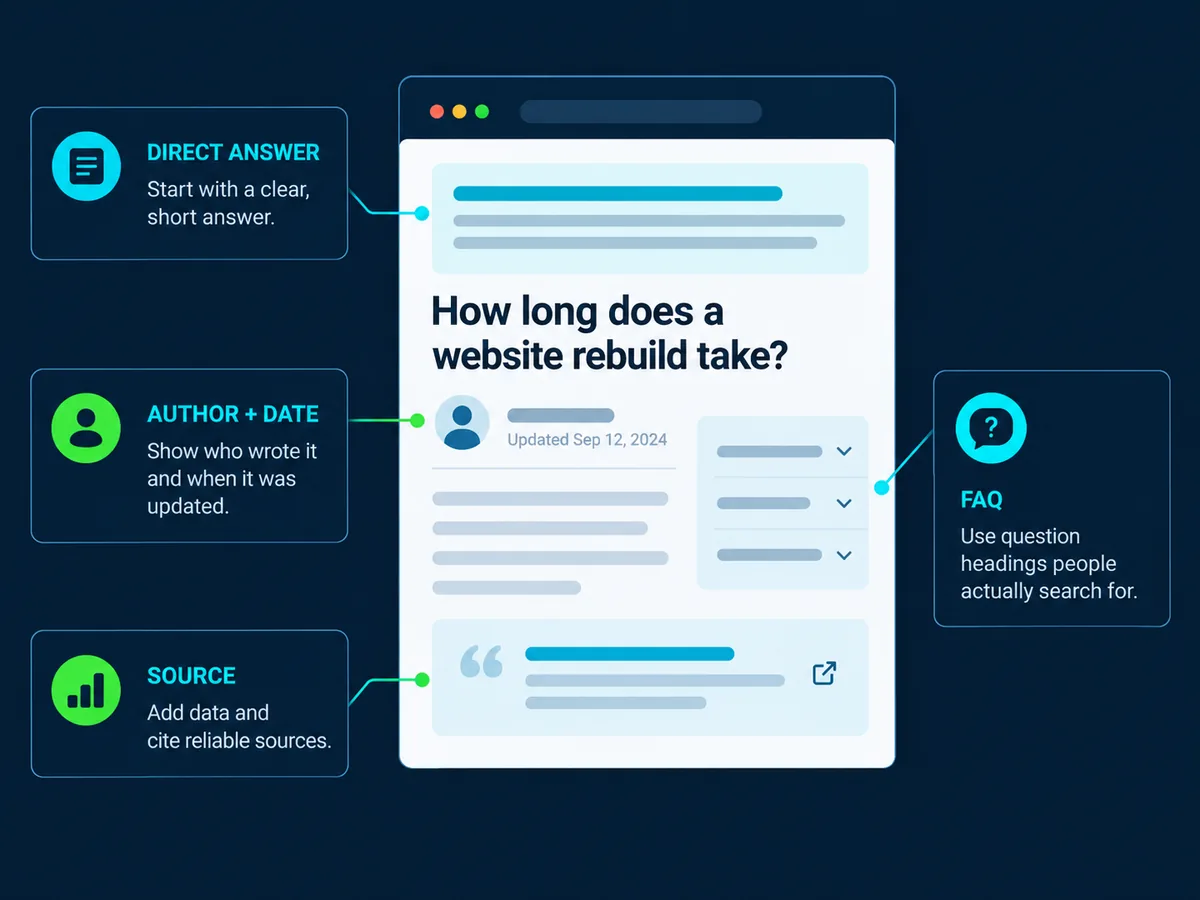
Start with a short, direct response. Then explain the reasoning, add context and provide useful details.
For example, if someone asks, “How long does a website rebuild take?”, answer the question upfront. Explain that the timeline depends on the website’s size, functionality, design requirements and content migration.
This structure helps readers find information quickly and makes your content easier for search systems to interpret.
2. Write headings around real customer questions
Creative headlines can catch attention, but descriptive headings help people understand what a page covers.
Think about the questions customers ask before they contact you:
- How much does a business website cost?
- Which SEO strategy is right for my industry?
- How long does app development take?
- What should I look for in a digital marketing agency?
Use these questions as headings and answer each one clearly. Tools such as customer interviews, sales conversations, search queries and website analytics can help you identify what your audience actually wants to know.
3. Give people reasons to trust your answers
A confident statement is not the same as a credible one.
Identify the author, include a publication or update date, and link to reliable sources when making factual claims. Use FAQs to address common concerns, and add relevant structured data where appropriate.
For example, instead of saying your websites are fast, explain how performance is measured and share genuine test results where available.
Trust comes from information people can verify, not just claims a business makes about itself.
4. Show your work
Specific evidence makes content more useful.
Include relevant case studies, original research, real project examples, transparent methodologies and measurable results. Explain what was done, why it was done and what the outcome was.
Never invent statistics or publish performance claims without evidence. If you cite an external study, link to the original source and represent its findings accurately.
The goal is to give readers, search engines and AI systems something substantive to understand and evaluate.
5. Keep your SEO fundamentals strong
AEO does not mean abandoning conventional SEO.
Make sure your important pages can be crawled and indexed. Use descriptive page titles, logical headings, relevant internal links, accessible content and appropriate structured data. Check your robots.txt rules so you do not unintentionally block search crawlers you want to access your pages.
Keep your website useful, mobile-friendly and technically sound. Search visibility still depends on several factors, and different AI tools may retrieve and select sources differently.
Where should you start with AEO?
Start with five questions a potential customer might ask:
- What does your product or service cost?
- How long does delivery take?
- Is your solution right for my business?
- How are you different from other providers?
- What happens if something goes wrong?
Build a useful page or section around each question. Answer plainly, support your claims and update the information as your business evolves.
AEO is not about finding a shortcut into AI-generated answers. It is about making your expertise easier to discover, understand and verify.
At QDynamics, we bring content, SEO and web development together to help businesses build a stronger digital presence.
Visit www.qdynamics.in or call +91 9562467132 to discuss your digital marketing goals.